

In the complex web of modern living, professional appliance repair services have become as essential to our daily existence as the machines they mend. Just as our ancestors relied on fire and simple tools, we’ve grown dependent on a sophisticated array of household appliances that, like any complex system, require skilled intervention when they falter.
The Hidden Cost of Singapore’s Throwaway Culture
In our affluent city-state, where GDP per capita stands at S$94,100 (2023), we’ve developed a peculiar habit: replacing rather than repairing. Yet, this behaviour exists in stark contrast to our purported environmental consciousness. According to the National Environment Agency, Singapore generated 60,000 tonnes of e-waste in 2022, with household appliances constituting approximately 30% of this figure.
The Economics of Repair vs. Replace
Consider this fascinating paradox: whilst a new refrigerator might cost between S$899 to S$2,499, most common refrigerator repairs cost:
- Thermostat replacement: S$150-250
- Compressor repair: S$200-400
- Door seal replacement: S$100-150
- Temperature sensor repair: S$120-200
The mathematics clearly favours repair over replacement in most scenarios, yet we often opt for the latter. This behaviour pattern mirrors what I’ve observed in my studies of human decision-making—we frequently choose immediate solutions over long-term sustainability.
The Environmental Imperative
Our relationship with household appliances reflects a broader pattern in human history—the tension between convenience and sustainability. According to Singapore’s Green Plan 2030:
- The nation aims to reduce waste-to-landfill per capita per day by 30%
- Domestic household recycling rate targets stand at 30% by 2030
- E-waste recycling goals are set at 60% by 2026
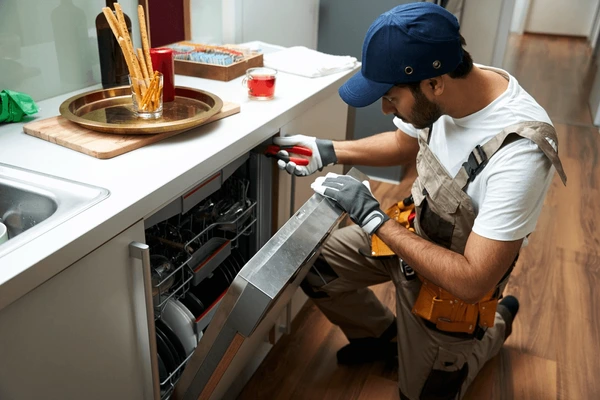
The Technical Revolution in Modern Repairs
Just as agriculture transformed into agri-tech, appliance repair has evolved into a sophisticated technical discipline. Modern repair technicians employ diagnostic tools that would seem like science fiction to their counterparts from just two decades ago. They represent a new class of skilled professionals who, like the scribes of ancient civilisations, hold specialist knowledge essential to societal functioning.
Understanding the Repair Cycle
The life cycle of appliance repairs follows a pattern remarkably similar to other complex systems in nature:
- Early detection of issues
- Professional diagnosis
- Targeted intervention
- Preventive maintenance
- System optimization
This cycle, when properly maintained, can extend an appliance’s lifespan by 5-10 years, according to Singapore’s Consumer Association (CASE).
The Psychology of Repair Decisions
Our relationship with household appliances mirrors our broader relationship with technology. In Singapore, where 76% of households own at least five major appliances, our decision-making around repairs reveals interesting patterns:
- 45% of Singaporeans attempt DIY repairs first
- 65% consider replacement before repair for appliances over 5 years old
- 80% would repair rather than replace if the cost is less than 50% of a new purchase
The Future of Appliance Maintenance
As we progress into an increasingly interconnected world, the future of appliance maintenance will likely mirror the evolution of human society itself—moving towards predictive and preventative care rather than reactive solutions. Smart appliances already communicate their maintenance needs, and this trend will only accelerate.
Economic Implications for Households
The financial wisdom of regular maintenance becomes clear when we examine the numbers:
- Average household spending on new appliances: S$2,000-3,000 annually
- Cost of regular maintenance: S$200-400 annually
- Potential savings through preventive care: Up to 70% of replacement costs
Conclusion
As we navigate the complex relationship between technology, sustainability, and economic pragmatism, the importance of maintaining rather than replacing becomes increasingly clear. Just as our species learned to preserve and maintain its tools rather than constantly crafting new ones, modern households must embrace the wisdom of preservation over replacement. In Singapore’s journey towards becoming a zero-waste nation, the thoughtful utilisation of professional appliance repair services represents not just a practical choice, but a step towards a more sustainable future.
